Forestry Mulching in Tuscarawas County, OH
One machine grinds brush and small trees where they stand and leaves the mulch behind. For landowners in Tuscarawas County with a fence line or a grown-up field edge to open up.
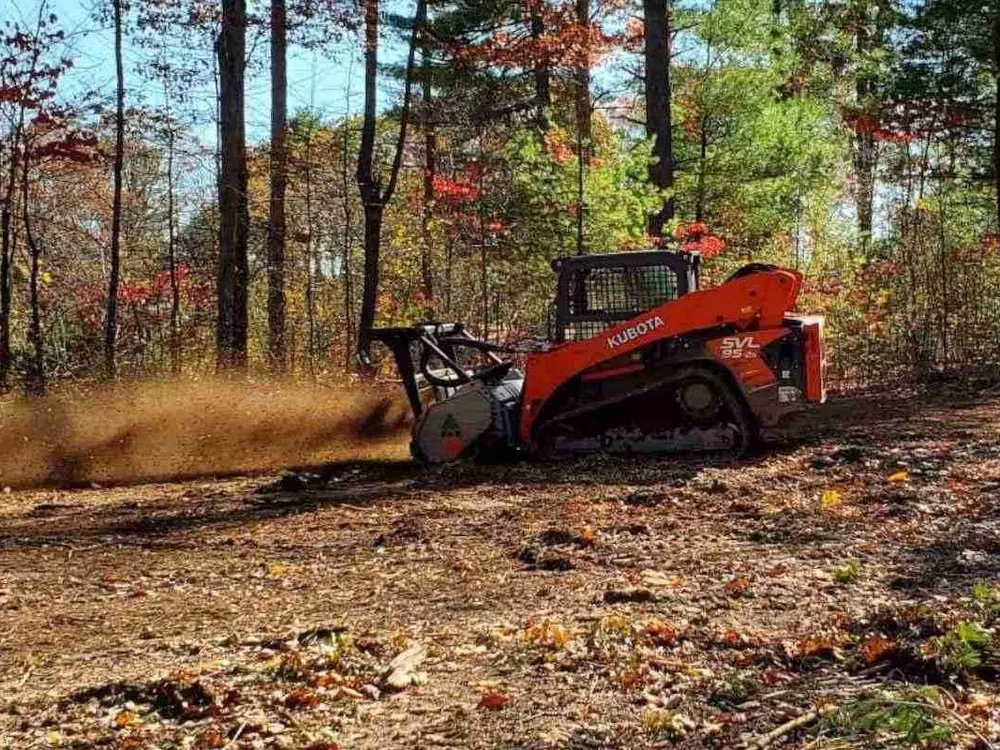
Forestry mulching is clearing land with one machine that has a mulching head: it cuts and grinds brush and small trees in place and leaves the shredded wood on the ground as mulch.
Forestry mulching clears brush and small trees with one machine. It grinds them where they stand and leaves a layer of mulch on the ground. Nothing gets burned or hauled. Pro Dirt Works does it across Tuscarawas County on fence lines, field edges, hunting ground, and wooded lots. Winter is the best time. Call or text (330) 988-4342.
Clear the Brush and Keep the Ground Covered
Forestry mulching is vegetation management with one machine. A lot of ground in Tuscarawas County needs exactly that. Fields have grown up in brush. Fence lines are lost under thorns. Some wooded lots are too thick to walk through, and old trails closed in years ago. We run a forestry mulcher on a compact track loader, and it grinds the brush and small trees down where they stand. No burn pile, no stack of logs to haul off. You end up with open ground under a layer of wood mulch that protects the soil. Some jobs need more than that, like roots out for a building. Then we pair mulching with land clearing and site prep, and the same crew takes the ground the rest of the way.
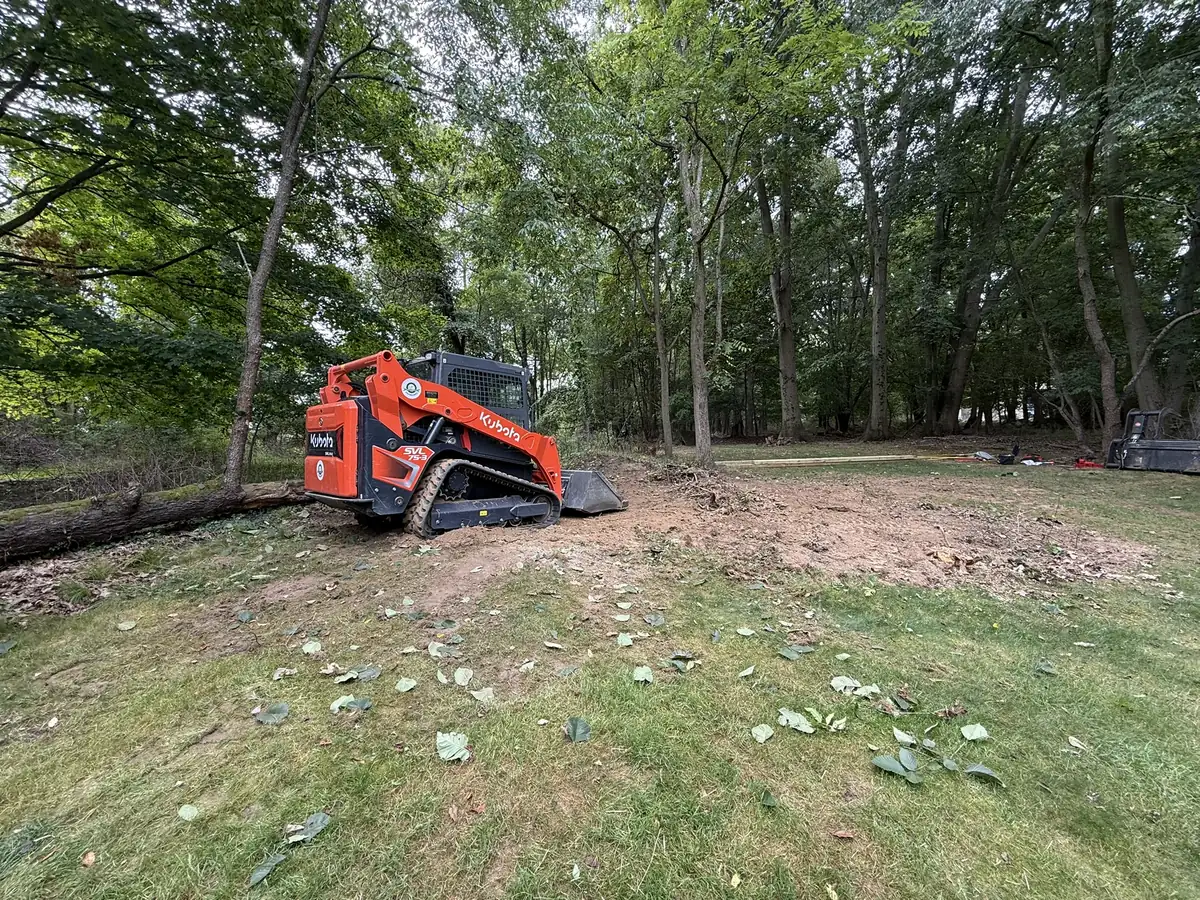
The mulcher is a heavy spinning drum with steel teeth on the front of a tracked machine. We drive up to the brush and lower the head. It chews through saplings and vines and spits out wood chips. Small trees can be mulched standing up. The operator works around the trees you want to keep, so the good ones stay. Stumps get mulched down low, close to the soil. The roots stay in the ground and help hold it together, which is fine for woods, trails, and fence lines. If you need stumps and roots all the way out, say for a building pad or a field you plan to work, that's land clearing. We dig those out with the machine. Very large trees are handled case by case. Before we start, we'll tell you what mulching will do on your ground and what it won't.
According to Ohio State University Extension, a 2011 Forest Service survey counted about 197,000 acres of forest in Tuscarawas County. That's 54.3% of the county's land, and 97.3% of it was privately owned. So most of the woods here belong to landowners, and that's who forestry mulching is for, especially when the ground got away from them. Pasture and hay ground with brush creeping in from the edges. Fence lines buried in multiflora rose. Overgrown access lanes. Wooded lots where the underbrush is so thick you can't see through or walk them.
On hunting ground, it can open shooting lanes, food plot edges, or a trail to your stand without tearing up the woods. Mulching is also a good first step on a lot before you build. Once the brush is gone, you can see the slope and pick the house site. Then only the footprint and the driveway need full clearing. And if a hillside grew in and blocked your view, mulching can open it back up and leave the big trees standing.
A job starts with a call or text and a few photos or a short video. From that, we can often give you a rough price range. Then we walk the ground with you. We flag the trees you want kept and mark the edges of the area. We also look for things the machine has to stay away from: old wells, culverts, buried fence wire, steep drop-offs. Then we set a date. On the day, we work the area in passes, and the mulch gets spread as we go. When we're done, we walk it again together. Want an edge cleaned up or one more tree taken down? Say so while the machine is still there. That's a lot easier than bringing it back out.
Cost comes down to machine time. Thick brush is the biggest factor. A thin stand goes fast, and a thicket of saplings and thorns takes a lot longer. Bigger trees take more time to bring down. Slope slows the machine and can limit where it can work safely. Access counts too. A gate wide enough for a trailer and a firm way in saves time, while a long trip across soft ground eats it up. Then there's how much ground you want cleared, and how fine you want it to look when we leave. One rough pass that knocks everything down costs less than going back over it for an even mulch layer. So we like photos first and a walk-through second. The estimate should match your ground.
Winter is the best season for forestry mulching. It's also when we have the most room on the schedule, since spring through fall we're busy with pads and site work. Frozen ground carries the machine better, with less rutting and less damage to the soil. With the leaves down, we can see the lay of the land, the old fence, and the trees worth saving. The mulch is already down before spring, too, so it's there to hold the soil when the snow melts and the rain comes. Want a field or fence line opened up by spring? Call during the cold months. We still go by the weather, though. We watch the ground and pick the days that make sense.
The mulch left behind does real work. It covers bare soil so rain doesn't wash it off slopes and into ditches. Over time it breaks down and turns back into soil. Some regrowth is normal, because the roots are still there. Invasive brush is the worst for it. Bush honeysuckle, multiflora rose, and autumn olive are all on Ohio's official invasive plant list. Ohio State University Extension notes that cutting bush honeysuckle off at the base causes heavy resprouting. So mulching knocks invasive brush back hard, but it won't finish it off alone. Plan on follow-up once the sprouts come in. That might be another mulching pass, or keeping it cut back on the ground you want open. If you'd like grass there instead of mulch, plan seeding as its own step.
Forestry Mulching vs. Traditional Methods
| Factor | Pro Dirt Works | Traditional |
|---|---|---|
| Brush and small trees | Chewed into mulch and left where it stood | Pushed into piles, then burned or hauled off |
| Machines on site | One machine cuts and cleans up | Often a dozer or excavator, plus trucks or a chipper |
| Soil | Topsoil stays put under the mulch | Scraped bare and open to washing out |
| Stumps | Mulched down low, roots left to hold the soil | Dug out, leaving holes to fill |
| Best for | Brush, fence lines, trails, hunting ground, thinning woods | Building sites and fields that need the roots out |
Common Uses for Forestry Mulching
- ✓Pasture and field edges
- ✓Fence lines lost in brush
- ✓Trails and access lanes
- ✓Hunting ground: shooting lanes and trails to stands
- ✓Underbrush in wooded lots
- ✓Opening up a lot before building
- ✓View clearing on grown-in hillsides
- ✓Invasive brush like bush honeysuckle and multiflora rose
Why Choose Forestry Mulching
No burn piles or hauling
The brush turns to mulch right where it stood. There's nothing to pile up or truck away.
Keeps the soil covered
Mulch keeps bare ground from washing out while the area settles in.
Save the trees you want
Point out the trees worth keeping. We clear the brush between them.
Easier on the ground
One tracked machine and fewer trips. On frozen winter ground, that means less rutting.
Our Forestry Mulching Process
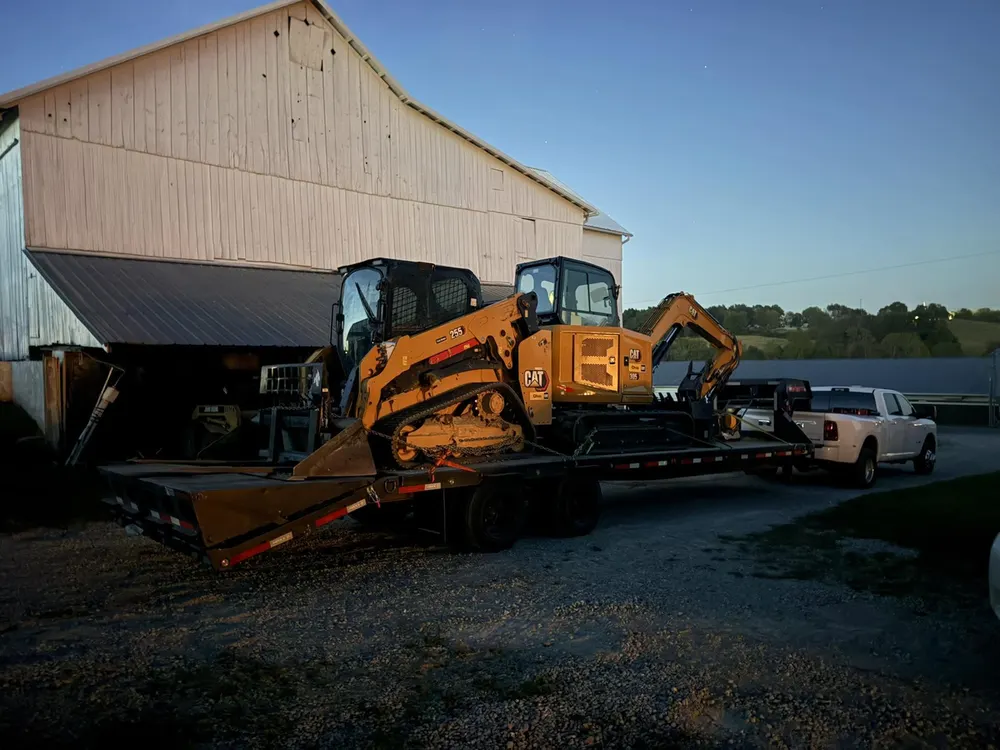
Send photos or a short video to (330) 988-4342. Tell us what you want cleared and what should stay.
We walk the ground with you and flag the trees to save. We'll point out spots the machine should stay clear of, and anything mulching won't handle well, like very large trees.
We pick a date. Often that's in winter, when the ground is firm and the leaves are down.
The brush and small trees get mulched in place, and the stumps come down low.
When we finish, we walk it with you and talk about what comes next, like regrowth, another pass, or seeding.
Forestry Mulching Pricing
Price comes down to machine time. Thick brush and bigger trees take the longest, and slope or a hard way in slows the machine down. How much ground you want cleared and how fine you want it to look matter too. Text a few photos to (330) 988-4342 and we can often send a rough price range the same day. Estimates are free.
Forestry Mulching FAQ
Common questions about forestry mulching in Tuscarawas County and East-Central Ohio.
It's a way to clear brush and small trees with one machine. A spinning drum with steel teeth grinds everything where it stands and leaves the shredded wood on the ground. Nothing gets burned or hauled off, and the soil stays covered.
That depends mostly on how thick the brush is and how big the trees are. Slope matters, and so does how easy it is to get the machine in. Then there is how much ground you want cleared and how fine a finish you want. Send photos or a short video and we can often give a rough range. The on-site estimate is free.
No. Stumps get mulched down low, close to the soil, and the roots stay in the ground to hold it. If you need stumps fully out for a building site or a field, that's a land clearing job. We dig them out with the machine.
Very large trees are handled case by case. Mulching works best on brush and small trees. Tell us what's out there, and we'll be straight with you about what makes sense.
Winter. Frozen ground carries the machine with less rutting. With the leaves down, we can see the ground and the trees worth saving. It's also our slow season, so getting on the schedule is easier.
Ohio limits that. Outside cities and villages, state law bans most open burning of brush from 6 a.m. to 6 p.m. in March, April, May, October and November. Local rules can add more limits on top of that. Mulching skips the whole question. The brush gets ground up and stays on the ground as mulch, so there's nothing left to burn.
Some of it can. The roots stay in the ground, and invasive shrubs can sprout back from them. Mulching gets you open ground and a fresh start. Keeping it open usually takes follow-up, like another mulching pass once the regrowth comes in.
It knocks it back hard, but it won't get rid of it for good on its own. Bush honeysuckle, multiflora rose, and autumn olive are on Ohio's invasive plant list, and Ohio State University Extension notes that cutting bush honeysuckle at the base leads to heavy resprouting. Plan on following up on the regrowth.
Start with what the ground is for. Want the material left on site as mulch, with the roots holding the soil? Then mulching fits, and it works well on fence lines, trails, hunting ground, and woods. Building or farming, and need the stumps and roots out? That calls for land clearing. Plenty of properties end up with some of each.
Related Services
Where We Offer Forestry Mulching
Last updated
Ready for Forestry Mulching?
Get a free, no-obligation estimate for your forestry mulching project.
Serving Tuscarawas County and East-Central Ohio · Mon-Sat 8am-5pm